









Podo
Baropodometry and Gait Analysis
Discover the invisible forces beneath your feet
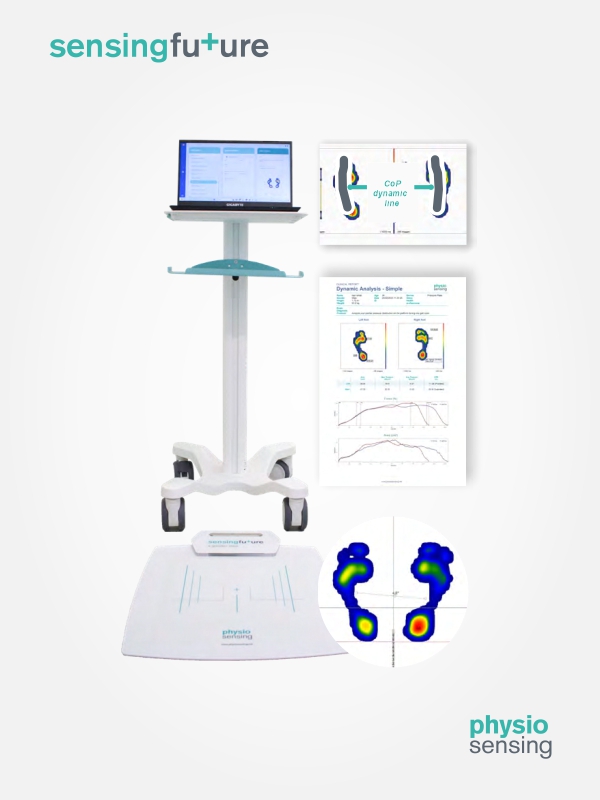
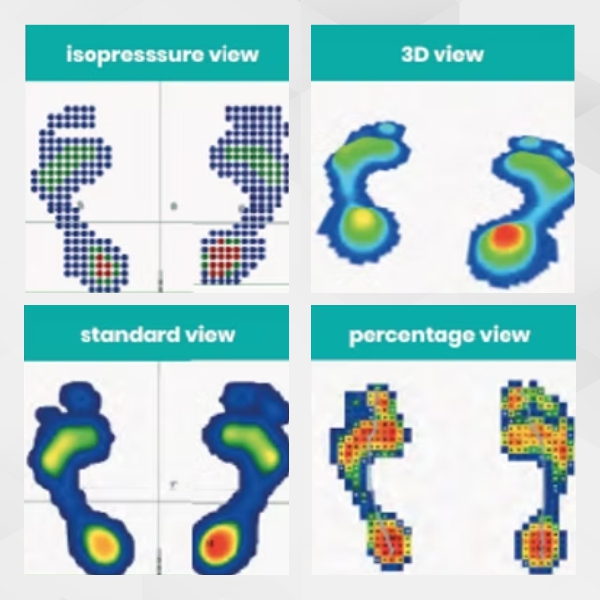
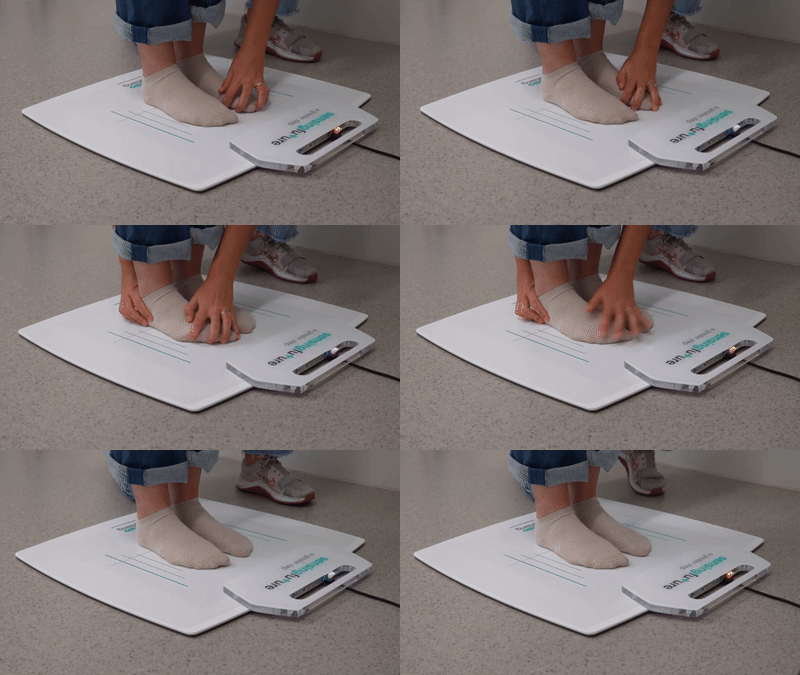
PhysioSensing Podo allows you to visualize and quantify plantar pressure distribution, revealing asymmetries, areas of higher load concentration, and variations that cannot be identified through visual observation alone. Using high-resolution sensors, this baropodometry and gait analysis platform transforms plantar recordings into detailed maps and objective data, providing an in-depth analysis of foot biomechanics, postural balance, and gait patterns.
With features for static and dynamic assessments, the system lets you investigate body weight distribution, foot contact area, and center of pressure (CoP) displacement, contributing to studies in lower-limb biomechanics, orthopedics, baropodometry, and human movement.
Applications
Applications in Orthopedics, Biomechanics, and Gait Analysis
PhysioSensing Podo offers advanced features for baropodometry and gait analysis, load distribution, and lower-limb biomechanics. Its applications span different foot morphological conditions, postural analysis, gait assessment, studies with orthoses and insoles, and research into biomechanical characteristics related to movement and physical performance.
Foot deformities and malalignments
Study of flat feet, hallux valgus, and pes cavus, with analysis of asymmetries and plantar pressure redistribution.
Biomechanical changes after orthopedic procedures
Analysis of gait characteristics and load distribution across different biomechanical conditions of the feet and ankles.
Plantar pressure distribution
Identification of regions with higher pressure concentration and analysis of load distribution patterns.
Orthoses and insoles
Analysis of plantar pressure distribution across different configurations of custom orthoses and insoles.
Sports and physical performance
Investigation of imbalances, load distribution patterns, and biomechanical characteristics related to athletic performance.
Postural analysis
Study of the relationship between foot load distribution and its biomechanical interaction with knees, hips, and spine.
Why choose PhysioSensing Podo?
Technology, Precision, and Advanced Features in Baropodometry and Gait Analysis
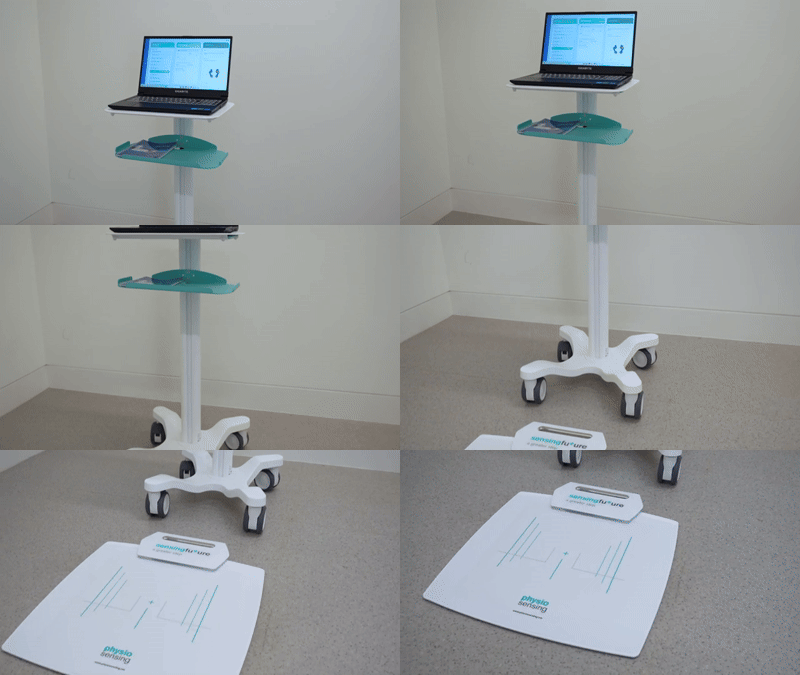
PhysioSensing Podo combines high-resolution sensors, fast data acquisition, and advanced tools for baropodometry and gait analysis. Its technology allows you to visualize load distribution details, identify asymmetries, track center of pressure trajectories, and analyze gait patterns. With a portable design, analysis software, and report generation, it offers a complete solution for studies in orthopedics, biomechanics, and movement science.
Because every step matters
The feet are the body’s foundation of support. Imbalances and overloads can affect the ankles, knees, hips, and spine.
Because observation alone isn’t enough
Traditional gait observation is subjective. Podo provides objective, high-resolution data for a more detailed analysis of movement patterns.
Fast sampling, dynamic clarity, and gait analysis
Record the gait cycle accurately by mapping the center of pressure and temporal movement patterns.
One platform, two dimensions of analysis
Investigate both static balance and dynamic gait for a more comprehensive understanding of foot biomechanics.
Complete and objective reports
Automatic generation of reports with pressure maps, graphs, and quantitative parameters, making documentation and result comparison easier.
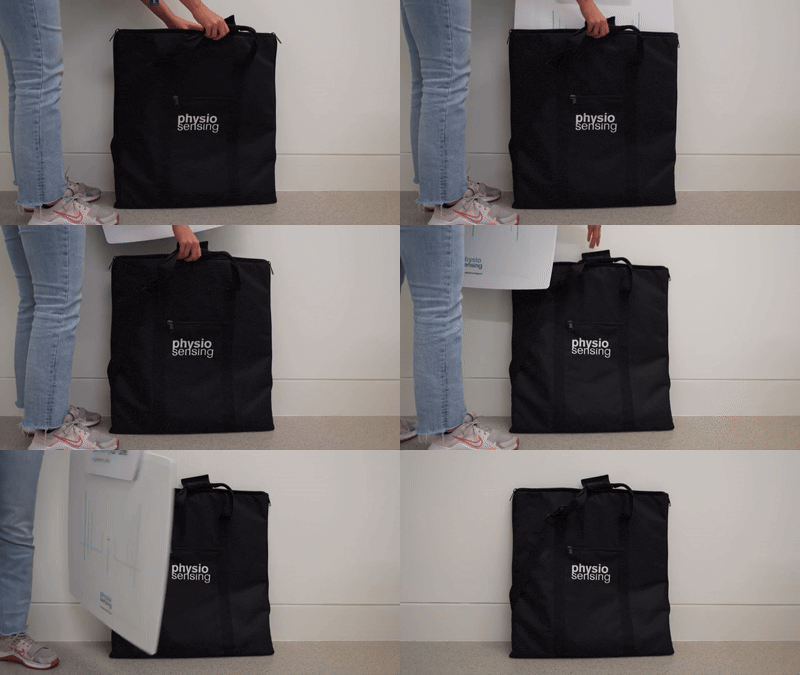
Lightweight, powerful, and portable
Transport the system easily and use it across different settings and laboratories.
Connected to the future
Share data, perform remote analyses, and explore integration possibilities with digital systems.
Load distribution analysis with insoles
Quantify changes in plantar pressure distribution and compare different configurations of custom orthoses and insoles.
Expand research possibilities
A platform with advanced biomechanical analysis features for universities, laboratories, and research centers.
Static and postural analysis
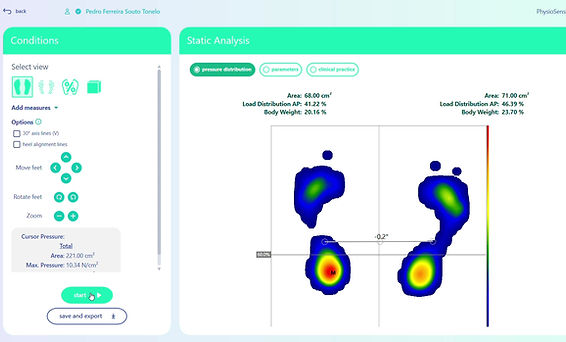
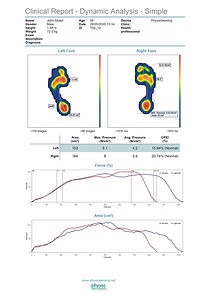
Plantar pressure mapping and postural balance analysis
PhysioSensing Podo offers features to analyze plantar pressure distribution and postural balance. Through pressure maps and quantitative parameters, it lets you observe center of pressure (CoP) behavior, identify asymmetries, and monitor load distribution during static assessment.
- Static mapping with center of pressure identification.
- Peak and average pressure calculations.
- Body weight distribution analysis.
- Different measurement possibilities.
- Comparison between assessments.
- Statokinesigram and stabilogram visualization.
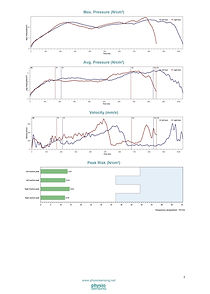
- Features for dynamic analysis.
Dynamic Analysis
Baropodometry and gait analysis for plantar pressure and movement evaluation
- Frame-by-frame recording playback.
- CPEI (Center of Pressure Excursion Index).
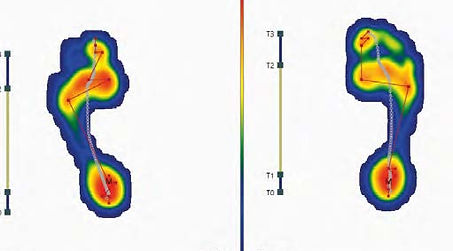
- Center of pressure (CoP) trajectory analysis.
- Force, area, pressure, and velocity graphs.
- Plantar pressure peak identification.
- Gait cycle phase identification.
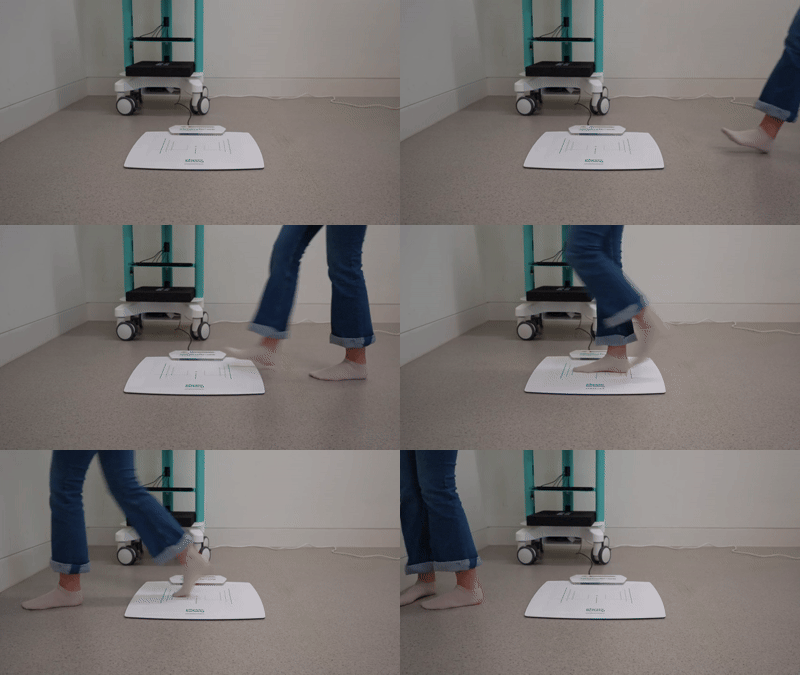
- Video export of plantar pressure maps while walking.
Learn more about Podo
Frequently asked questions about Podo
Baropodometry is the objective measurement of plantar pressure between the feet and a support surface. It is used to analyze how pressure and body weight are distributed during static standing and walking (gait), helping professionals identify asymmetries, pressure hotspots, and altered loading patterns, as well as supporting decisions on rehabilitation, footwear, and orthotic insoles.
Podo was designed for podiatrists, physical therapists, orthopedic professionals, rehabilitation clinics, sports medicine specialists, diabetic foot care teams, orthotists, universities, and researchers who assess plantar loading, posture, gait, and lower-limb function.
PhysioSensing Podo is a portable platform for baropodometry and gait analysis across static, postural, and dynamic assessments. It generates plantar pressure maps and objective measurements of pressure, contact area, force, weight distribution, and center of pressure progression during standing and walking.
A plantar pressure map is a visual representation of the pressure applied by different areas of the feet. Colors typically represent lower and higher pressure values, allowing healthcare professionals to identify loading patterns, asymmetries, and areas of increased plantar pressure that may not be visible through clinical observation alone.
During dynamic analysis, Podo measures how plantar pressure, force, and contact area change throughout a gait cycle. It can display individual frames, center of pressure progression, pressure and force curves, contact patterns, and temporal characteristics of the different gait phases.