









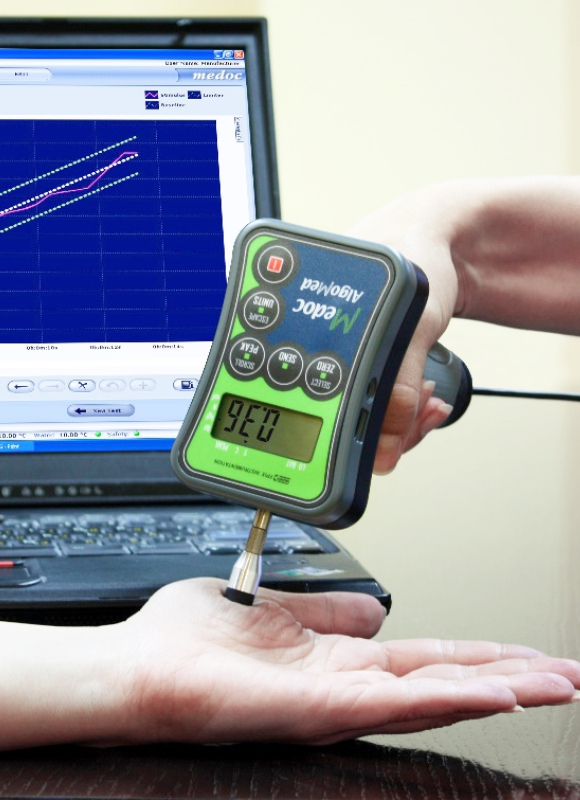
AlgoMed
Computerized Pressure Algometer with Biofeedback
Pain Assessment with Precision and Reproducibility in Scientific Research
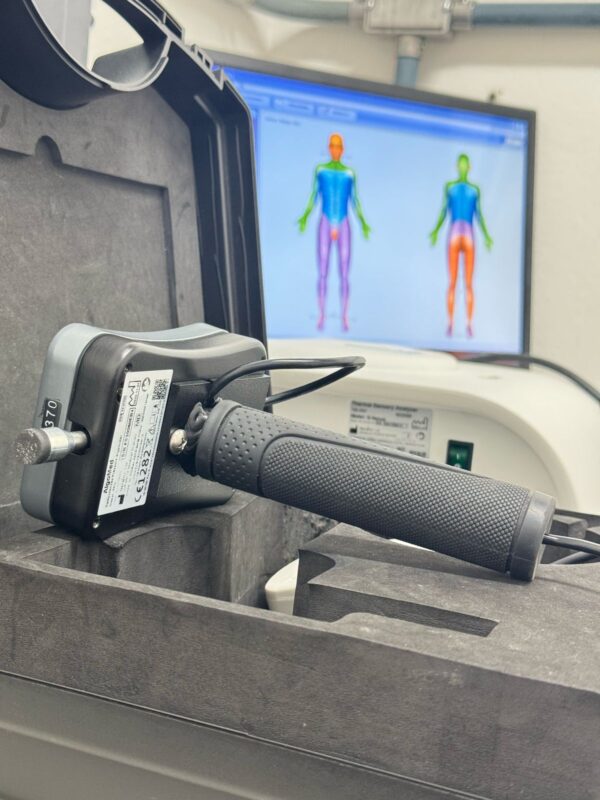
The AlgoMed is a computerized pressure algometer developed by Medoc for applications in Quantitative Sensory Testing (QST), pain research, and clinical trials. The system allows for the objective and standardized assessment of the Pain Pressure Threshold (PPT) and pain tolerance.
Controlled pressure application enables the investigation of pain sensitivity in muscles, fascia, tendons, ligaments, joints, and periosteum, providing quantitative and reproducible data for studies on pain and sensory processing, including research related to conditions such as fibromyalgia, myofascial pain, osteoarthritis, and neuropathies.
The Technological Edge: The Power of Visual and Auditory Biofeedback
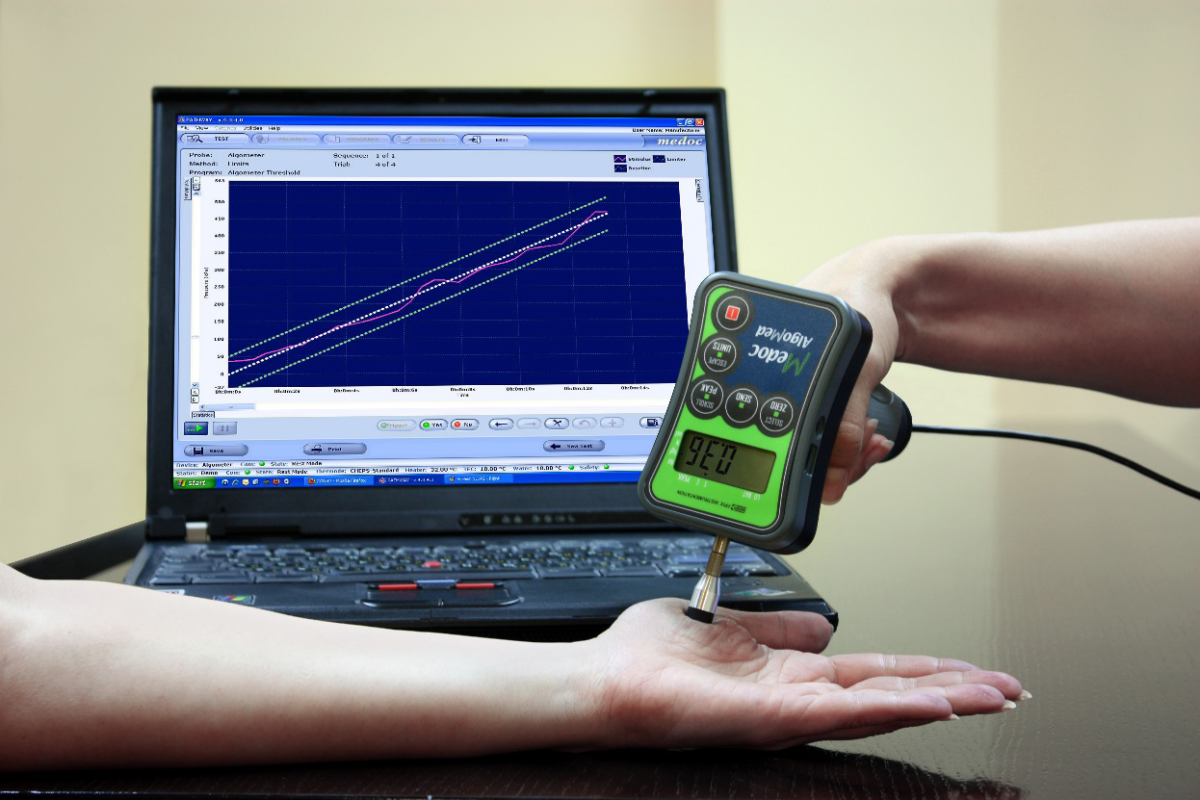
Digital algometry with computerized control of pressure application
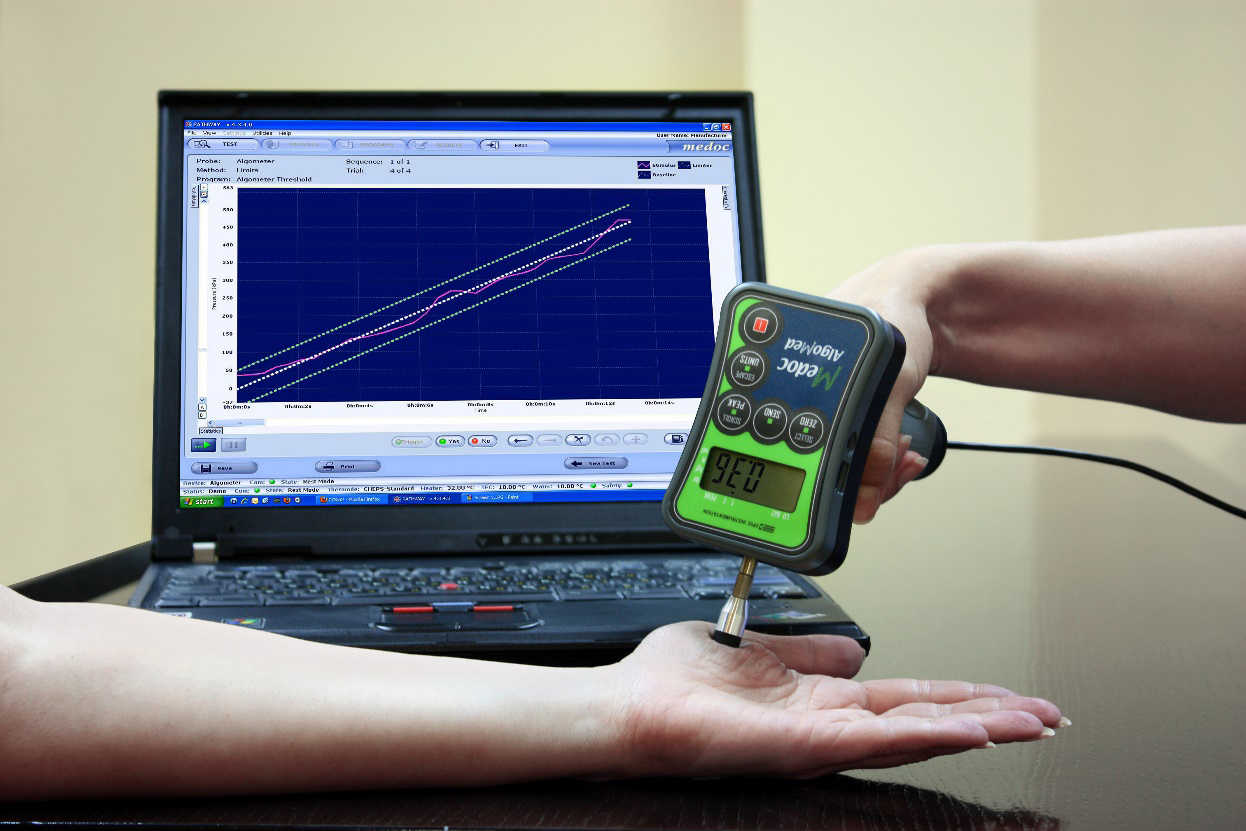
The AlgoMed integrates digital algometry with an advanced real-time visual and auditory biofeedback system.
Unlike manual pressure application, which may present variations in the applied rate and force, the AlgoMed software guides the examiner through an intuitive graphical interface.
The system provides real-time feedback to assist in applying a controlled and consistent pressure rate, contributing to greater methodological consistency during pain assessment protocols in different research contexts.
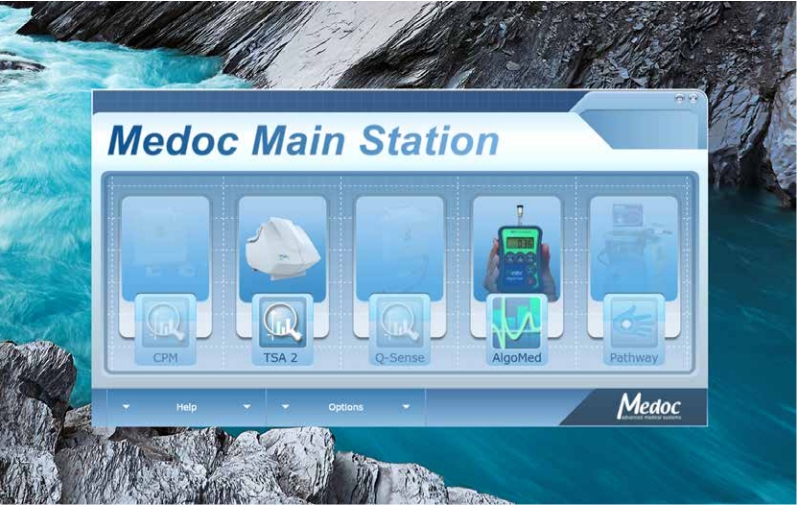
Dynamic Control (Medoc Main Station)
Detailed on-screen graphs display the ideal pressure curve and the pressure applied by the operator in real time during the examination.
Standardization and Reproducibility
Computerized control reduces intra- and inter-rater variability, providing reliable measurements for research and clinical trials.
Safety, Comfort, and Interruption
The Patient Response Unit allows the test to be interrupted immediately by moving the sensor away from the body.
Medoc Main Station (MMS) Software
Advanced computational interface for real-time data acquisition, processing, control, and export.
The computational ecosystem of the AlgoMed operates through the Medoc Main Station (MMS), Medoc’s proprietary software developed specifically for the programming, management, and rigorous control of algometry protocols and pressure tests.
The software runs on Windows (compatible with Windows 10 and 11), offering a highly intuitive, robust interface oriented toward scientific investigation to monitor, structure, and manage detailed data on pain pressure thresholds (PPT) and nociceptive responses in real time.
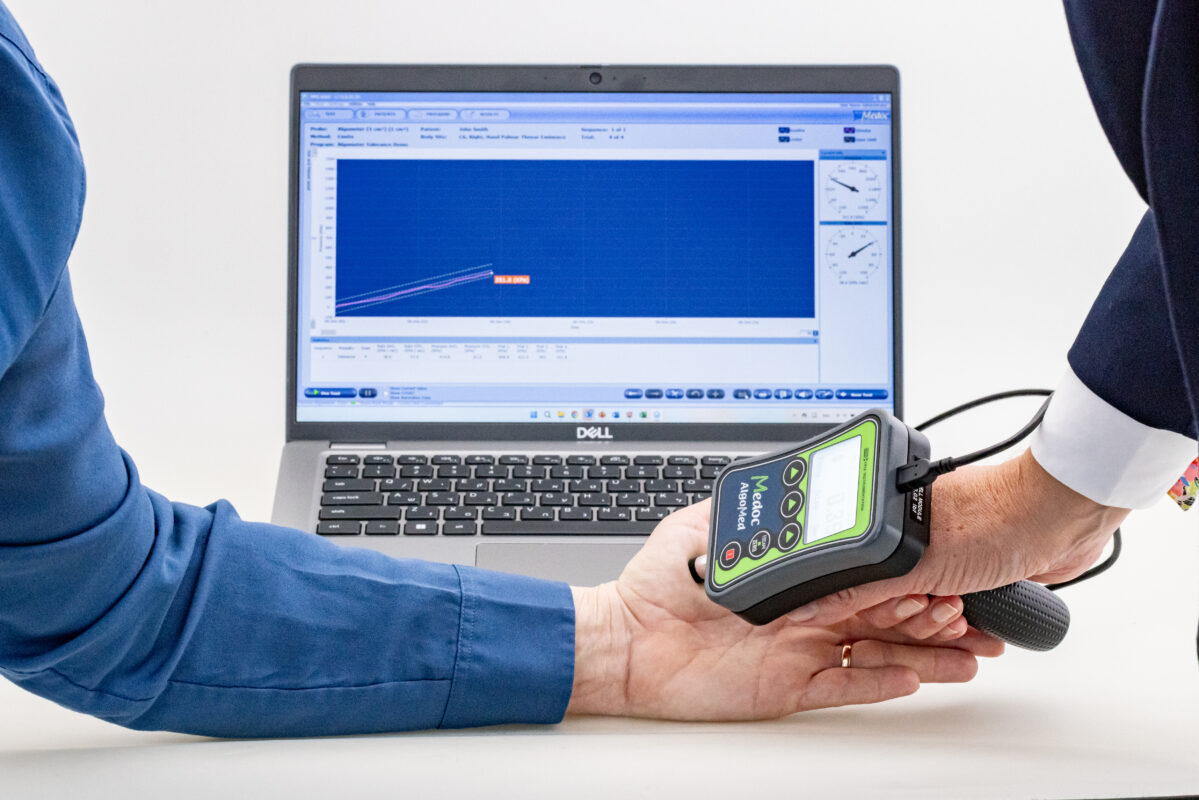
Visual and Auditory Feedback
On-screen reference lines guide the operator in real time, assisting in controlling the pressure application rate.
Centralized Database
Allows managing patients, test history, and backups in a single workstation.
Calculations and Statistics
The MMS performs calculations of results, including means, standard deviation, and applied force parameters.
Anatomical Mapping
Provides preconfigured body sites and allows registering new points according to the protocol.
Reports and Export
Results can be exported to Excel and presented in reports with statistics for the method.
Windows Compatibility
Developed for Windows 10 and 11 computers, facilitating integration into the clinical environment.
Versatile Pressure Test Paradigms and Pain Metrics
Comprehensive support for advanced deep somatic pain assessment protocols and sensitivity metrics
The AlgoMed enables researchers, clinical centers, and neuroscience laboratories to execute a wide range of standardized protocols in Quantitative Sensory Testing (QST).
By transforming pressure algometry into a computerized procedure, the system contributes to greater methodological rigor, reducing inter- and intra-rater variability and providing consistent data for scientific research and clinical trials.
PPT – Pain Pressure Threshold
Pain Pressure Threshold
Objective quantification of the exact moment when mechanical pressure applied to deep tissues begins to be perceived as painful.
PPTol – Pressure Pain Tolerance
Pressure Pain Tolerance
Advanced measurement of the maximum level of pain and discomfort an individual can endure during progressive compression.
R&H – Ramp & Hold Protocols
Ramp and Hold Protocols
Automated application of static tonic stimuli in a trapezoidal format for evaluating sustained thresholds.
TS – Temporal Summation
Temporal Summation
Fundamental, standardized paradigms for the electrophysiological study of central pain facilitation at the spinal level.
CPM – Conditioned Pain Modulation
Conditioned Pain Modulation
Integration with complementary protocols for evaluating descending inhibitory mechanisms, historically known as DNIC.
AS – After-Sensations
After-Sensations Assessment
Quantitative measurement of residual pain that persists after removal of the mechanical stimulus, a key indicator of central sensitization.
Technical Specifications
Technical Parameter |
AlgoMed Specification |
|---|---|
| Modality | Computerized Algometry and Pressure Biofeedback (QST) |
| Pressure Range | Up to 1000 kPa (depending on configuration and protocol) |
| Measurement Units | kPa, kgf/cm², and lb/in² |
| Pressure Probe | Circular probe of approximately 1 cm² |
| Handle | Ergonomic, designed for optimal control of applied force |
| Response Unit | Patient Response Unit for signaling and immediate interruption |
| Assessment Protocols | PPT, PPTol, Ramp & Hold, Temporal Summation, CPM, After-Sensations |
| Software and Connectivity | Medoc Main Station (MMS) for Windows 10 and 11 |
| Battery Life | Rechargeable battery with up to 50 hours of autonomy |
Technical parameters and performance specifications developed to ensure full precision, reliability, and methodological rigor in somatosensory mapping
Need more information?
Consult our documentation and technical resources for more details about the product.